

If you’ve ever walked into one room that feels like a sauna while the next is chilly, your radiators probably aren’t being controlled as well as they could be. A big part of that control comes down to thermostatic radiator valves, often shortened to TRVs. They’re a small addition to your central heating system, but they make a noticeable difference to comfort and running costs.
We’re often asked by homeowners and landlords across Bognor, Felpham and Aldwick what TRVs actually do and whether they’re worth fitting. This guide breaks it down in plain English so you can decide if they’re a smart upgrade for your property.
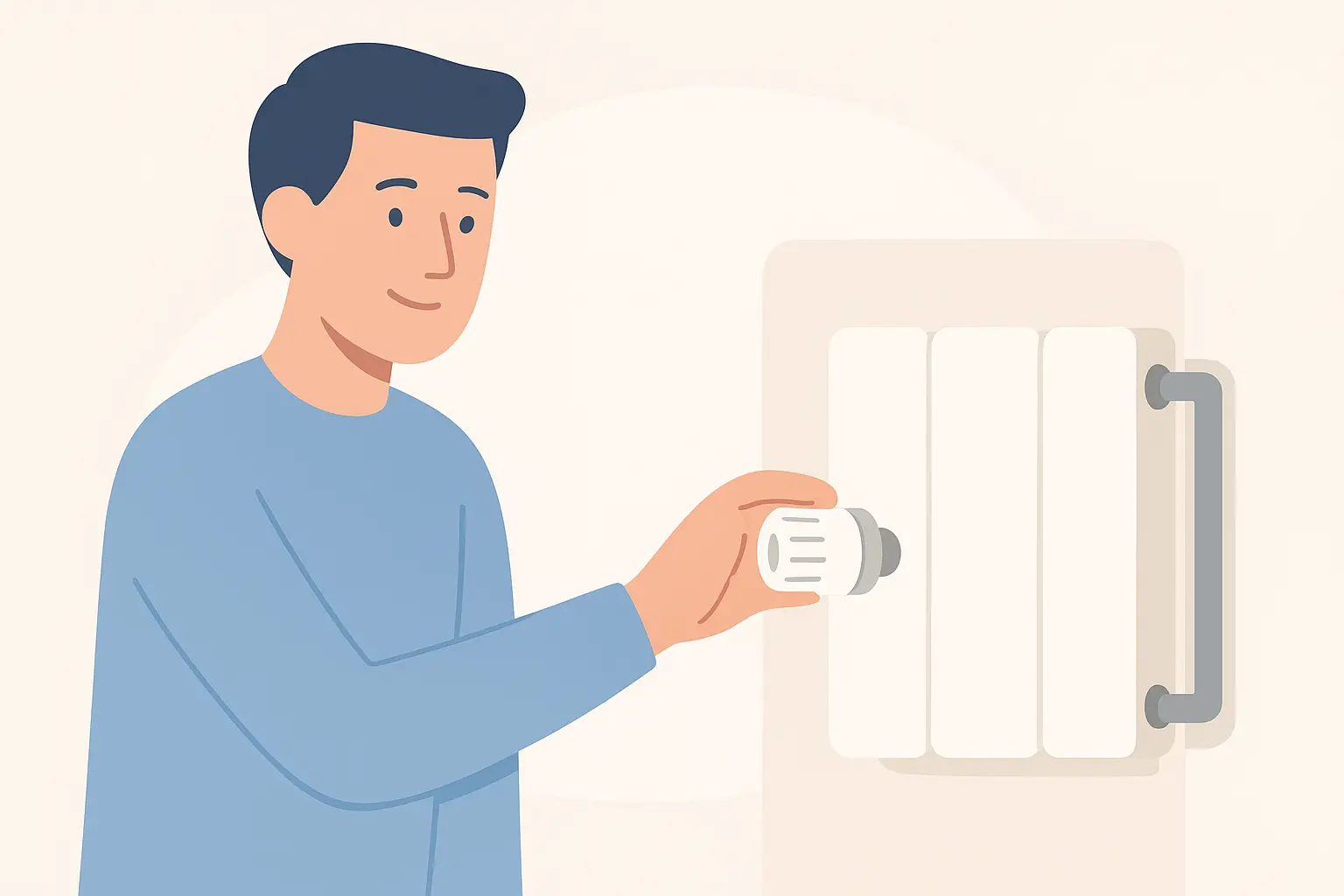
How thermostatic radiator valves fit into your heating system
Your central heating system works by heating water in the boiler and pumping it around your home to each radiator. The boiler might have a single room thermostat that controls overall temperature, but without TRVs every radiator heats up at the same rate regardless of how warm that room already is.
A thermostatic radiator valve is fitted to the side of an individual radiator, usually where the hot water flows in. Instead of simply being on or off, it automatically adjusts the amount of hot water entering that radiator based on the room temperature.
So rather than heating the whole house to one blanket temperature, you can have the lounge warm in the evening, bedrooms slightly cooler overnight and a spare room ticking over at a lower setting.
The key parts of a TRV
TRVs are straightforward bits of kit. They’re made up of two main components:
- The valve body which connects to the pipework and controls water flow into the radiator.
- The thermostatic head which senses the air temperature in the room and tells the valve to open or close.
Inside the head is a small capsule filled with wax or liquid. As the room warms up, that material expands and gently pushes the valve closed. As the room cools, it contracts and allows more hot water through. It’s all automatic and doesn’t need any wiring.
Most TRVs have numbers on the top instead of degrees. Those numbers correspond roughly to temperature ranges. For example, setting 3 is usually around 20 degrees. We often explain this during installation because it catches people out at first.
The benefits of installing TRVs
For many properties in areas like Bognor, Felpham and Aldwick, TRVs are one of the simplest ways to improve heating efficiency without replacing the entire system.
1. Better energy efficiency
If every radiator blasts out heat until the main thermostat is satisfied, you often end up overheating parts of the house. TRVs reduce wasted heat by shutting off radiators once a room reaches the desired temperature.
In practice, that means the boiler runs more efficiently because it isn’t constantly firing to heat rooms that are already warm. Over time, that can make a noticeable difference to gas consumption, especially in larger homes.
2. Improved comfort room by room
One of the most common complaints we hear is about uneven temperatures. Maybe the kitchen heats up quickly when you’re cooking, or a south facing lounge gets plenty of afternoon sun.
With TRVs, those rooms can regulate themselves. You’re not relying on one hallway thermostat to represent the entire house. It gives you much finer control, which families and tenants alike appreciate.
3. Lower heating bills over time
While TRVs are not magic money saving devices, preventing unnecessary heating does help reduce overall usage. Landlords in particular like them because they provide control at room level without tenants interfering with the main system.
In HMOs and rental properties, we often set lower background temperatures in communal areas while allowing reasonable comfort in bedrooms. It’s a practical way to balance cost and comfort.
4. Support for modern boilers
If you’ve recently upgraded or are considering a boiler installation, TRVs work hand in hand with modern condensing boilers. The more controlled the heat demand, the more efficiently the boiler can operate.
In fact, current regulations generally require TRVs to be fitted during a new boiler installation unless there’s a valid reason not to. It’s now seen as standard good practice rather than an optional extra.
When should you upgrade or replace TRVs?
Like any mechanical component, TRVs do not last forever. We still come across older metal capped valves in properties that have not been changed in twenty years or more.
Here are a few signs it may be time to replace them:
- The radiator stays cold even when the valve is turned up fully.
- The radiator heats constantly and will not turn down.
- The valve feels stuck or difficult to turn.
- You notice small leaks around the valve.
Sometimes the issue is simply a stuck pin inside the valve body, which can be freed during a service visit. Other times, especially with older systems in coastal areas like ours where corrosion can be a factor, replacement is the better option.
Professional installation advice
Although competent DIYers might be tempted, replacing TRVs involves draining down part or all of the heating system. It is easy to introduce air, create small leaks or incorrectly balance the system afterwards.
We always recommend having them installed and balanced properly. Correct balancing ensures each radiator heats at the right rate and prevents complaints about rooms not warming up after new valves are fitted. It’s one of those finishing touches that makes the whole system work as it should.
If you are unsure whether your current setup is giving you the best performance, a routine boiler service is a good time to ask. A heating engineer can check the condition of your valves, system pressure and overall efficiency in one visit.
Upgrading to thermostatic radiator valves is a small change that can have a big impact on comfort and energy use. For straightforward advice tailored to your home or rental property, the team at T Griffin are always happy to help. Get in touch today to arrange your boiler service or request a quote for a new boiler and professional installation.